
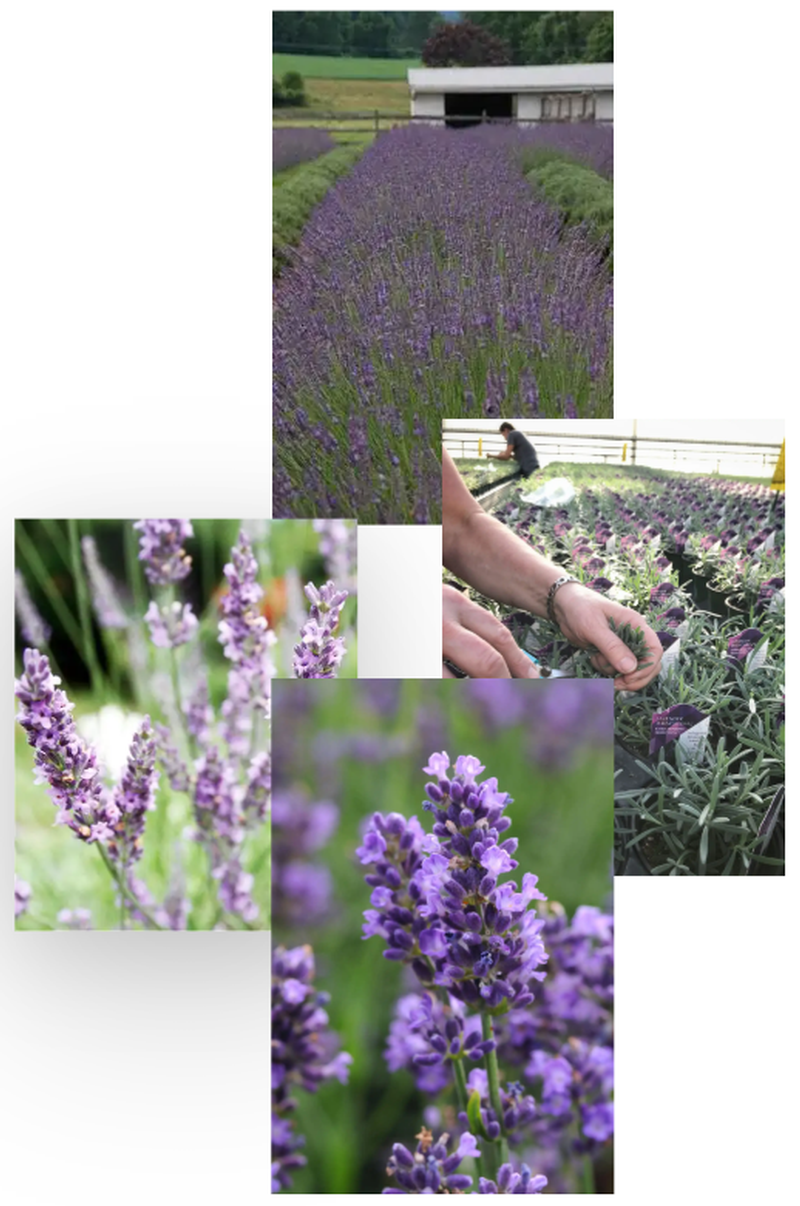
Lavender Field Growing Information and References
Lavender farmers often have questions about what varieties will work best for them in their particular region. This is not, however, replacement for your own homework in any way, and makes no guarantee of suitability of success in your specific area or intended purpose.
WORK TO BE DONE BEFORE PURCHASING PLANTS
*Frequently asked questions from lavender farmers are often ones we don’t feel comfortable answering but we do have resources available to them.*Soil and Water Testing:
• Local extension agencies are available for water and soil testing, but are often lacking in covering all nutrients.• In order to know if one needs fertilizer or soil amendments, a good source of testing is JR Peters Lab at www.jrpeterslab.com or Dr. Curtis Swift at www.mesalavenderfarms.com. They both work with many growers.
Field Prep:
• Drainage is key. Raised berms or beds can be used or planting on sloped areas.• Loamy soil is better than adding sand or gravel. Sand+gravel+clay=concrete
Sun and Temperature Requirements:
• All lavenders need full sun and a winter vernalization period in order to bloom.• Vernalization is achieved during the winter months. Rule of thumb is 8 weeks of cool nights.
• Each lavender has its own cold zone limit and humidity tolerance which will be indicated later in this form.
Why Are You Growing Lavender?
• Uses are culinary, oil distillation, dried flowers, and cut flower production.• Each variety has its own distinct character – check our list to find out which variety can work for you.